
Descriptive Essay on a Busy Market: Sensory Writing Guide
✨ This article was AI edited. Editorial responsibility: School Essay Writer.
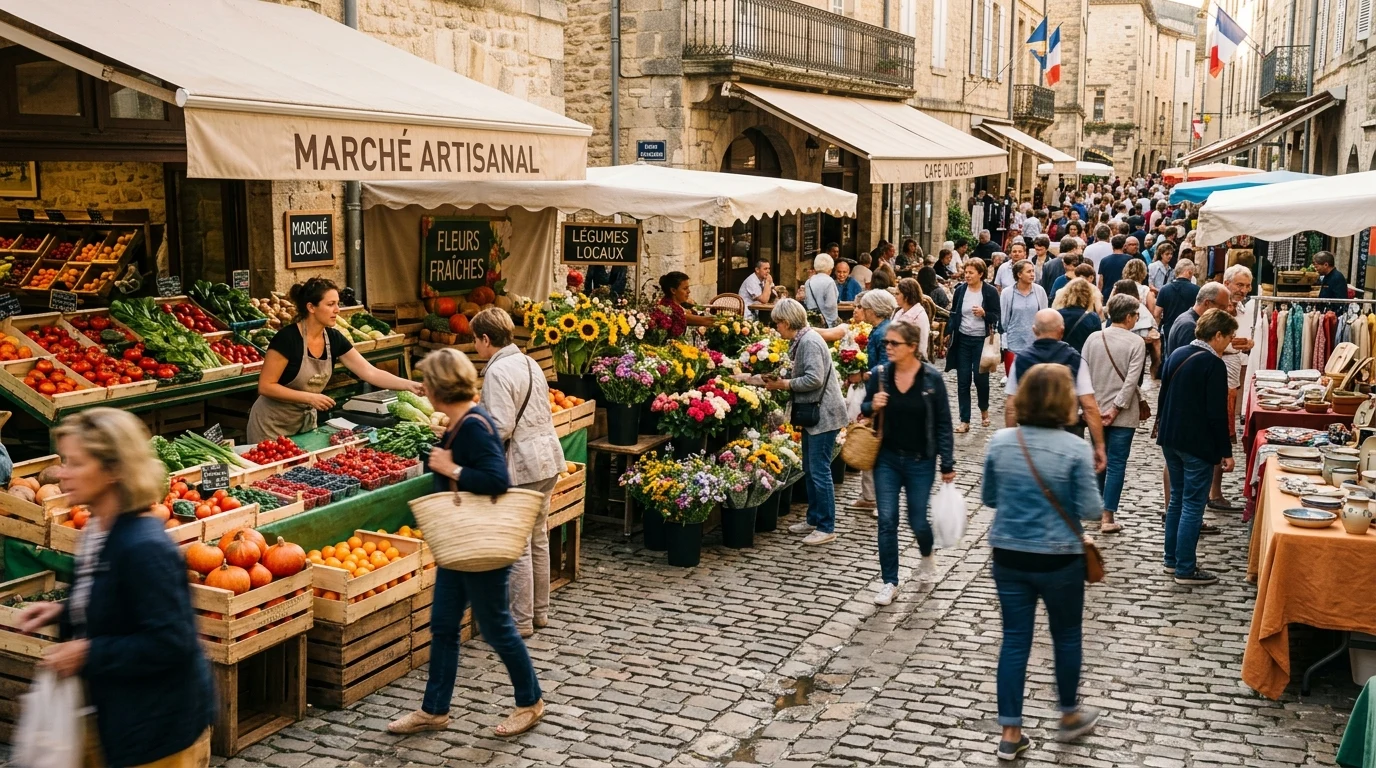
Writing a descriptive essay on a busy market requires immersing the reader in a multi-sensory tapestry of sights, sounds, aromas, kinetic motion, and human interactions. By contrasting quiet morning preparations with peak midday commerce, writers bring the vibrant chaos of a public marketplace to life on the page.
Public markets represent the pulsing heartbeat of human culture, commerce, and community. From historic European cobblestone squares and Middle Eastern spice souks to bustling Asian floating markets and American farmers’ markets, these spaces offer an unparalleled sensory playground for descriptive and narrative essays. To capture the essence of a market, writers must move beyond generic visual lists and instead weave together acoustic rhythms, atmospheric scents, and intimate human vignettes.
Contents
The Five-Sense Marketplace Sensory Matrix
Crafting an immersive market description requires engaging every sensory channel. The matrix below outlines concrete vocabulary, sensory cues, and atmospheric details to incorporate into your essay:
| Sensory Channel | Physical Triggers & Environmental Cues | Evocative Lexicon Bank | Example In-Sentence Application |
|---|---|---|---|
| Sight & Color | Mounded produce, awning stripes, shimmering fish scales, copper pans | Kaleidoscopic, ruby pomegranates, burnished copper, striped canvas, glistening ice, undulating crowd | Pyramids of sun-ripened blood oranges and emerald limes glowed under the amber morning light beneath faded canvas awnings. |
| Sound & Cacophony | Vocal hawking, clattering coins, rolling handcarts, sizzling griddles | Stentorian baritone, polyphonic chatter, clattering crates, rhythmic chopping, sizzling grease, melodic bargaining | The air vibrated with a polyphonic roar as fishmongers bellowed daily catches over the rhythmic clatter of wooden crates on stone. |
| Smell & Aroma | Fresh herbs, roasted spices, espresso, brine, floral bouquets | Pungent coriander, toasted cumin, rich espresso, salty brine, roasted chicory, sweet ferment, floral headiness | Heady clouds of crushed cardamom and roasted cumin mingled seamlessly with the damp, mineral tang of wet river stones. |
| Taste & Texture | Sampling ripe fruit, warm bread, savory street food, coarse salt | Velvety pulp, sharp citrus zest, flaky crust, savory umami, crystalline brine, sugary glaze | The vendor offered a sliver of ripe fig; its velvety, seed-studded sweetness dissolved across the tongue with honeyed warmth. |
| Kinetic Motion & Touch | Shoulder-to-shoulder crowds, brushing fabric, rough burlap, cool ceramic | Swarming current, abrasive burlap, polished glaze, jostling shoulders, humid crush, kinetic frenzy | Navigating the central aisle felt like swimming against a warm, human tide of wicker baskets, brushed wool, and eager elbows. |
Chronological Progression: Constructing a Narrative Arc
A static description quickly becomes tedious. Structure your market essay chronologically across the day to build natural tension and rhythm:
- Dawn Setting (The Unfolding Stage): Describe the arrival of delivery trucks, the unfolding of metal trestle tables, the sweeping of stones, and the sharp morning chill before customers arrive.
- Morning Surge (The Commercial Awakening): The arrival of early-bird shoppers, the inspection of prime cuts, the crisp aroma of morning coffee, and the initial pleasantries between familiar faces.
- Midday Climax (The Sensory Zenith): The peak hour where sound, scent, and kinetic friction reach maximum intensity. The sizzle of hot griddles, the frantic bargaining, and the visual density of the crowd.
- Afternoon Decrescendo (The Lingering Aftermath): Wilted lettuce leaves on wet cobblestones, discounted bins of softening fruit, tired vendors counting bills, and the slow packing of canvas canopies.
Complete Model Essay: The Symphony of the Grand Market (1,000 Words)
Movement I: The Dawn Blueprint
Before the city shook off its nocturnal slumber, the old square was already humming with industrious whispers. Beneath a canopy of iron rafters dating back to the late nineteenth century, vendors moved with practiced, mechanical efficiency. Heavy wooden crates groaned as they were unloaded from flatbed trucks, their slatted sides revealing dewy bunches of Tuscan kale, mounds of purple artichokes, and earthen sacks of unwashed potatoes smelling richly of damp loam.
The air carried a biting morning crispness, sweetened only by the dark, smoky roast of espresso brewing in the corner cafe. Steel shutters rattled open with thunderous crashes, echoing off the neoclassical facades bordering the square, announcing to the waking neighborhood that the market was open for trade.
Movement II: The Morning Tide
By nine o’clock, the trickle of early shoppers had broadened into a steady, flowing river of humanity. Sunlight filtered through the stained skylights above, casting geometric patterns of amber and dust across the damp flagstones. At the seafood stall, an impressive glacier of crushed ice supported a shimmering harvest from the Mediterranean: silver-scaled sea bass with glassy eyes, glistening tentacles of purple octopus, and towers of black mussels dripping with salty ocean brine.
The fishmonger, an imposing man with forearms like cured timber, wielded his cleaver with terrifying grace, cleaving salmon fillets with rhythmic, hollow thuds that kept time with the ambient roar of the pavilion. “Direct from the docks!” his baritone voice boomed over the polyphonic chatter of bargaining matrons and squawking gulls hovering near the eaves.
Movement III: The Midday Cacophony
At noon, the marketplace reached its chaotic, glorious crescendo. The atmosphere grew thick and intoxicating with competing culinary scents: the sharp, vinegary punch of cured olives, the nutty warmth of aged wheels of Parmesan cracked open with brass knives, and the mouthwatering sizzle of garlic and chorizo on blistering cast-iron planchas.
To walk down the central spice alley was an exercise in olfactory intoxication. Sacks of scarlet paprika, turmeric yellow as summer sun, and crushed sumac stood rolled at the cuffs like open treasure chests. Every few paces, an eager merchant extended a sliver of blood orange or a cube of warm focaccia on the tip of a knife, coaxing hesitant passersby into spontaneous indulgence. The visual density was staggering—a living kaleidoscope of woven wicker baskets, flapping canvas signs, gesturing hands, and vibrant produce.
Movement IV: The Afternoon Quietude
As the afternoon sun cast long, lazy shadows across the square, the frenetic energy gently subsided. The rhythmic calls grew sparse, replaced by the scraping of brooms against wet cobblestones and the satisfying zip of cardboard boxes being taped shut. Vendors sat on upturned crates, wiping their brows and sharing leftover pastries with neighboring merchants.
The market had once again transformed. In its wake, it left a profound reminder of the timeless human instinct for physical connection, commerce, and community—a sacred space where food and culture unite the city in shared celebration.
Advanced Descriptive Writing Techniques for Settings
- Use Micro-Focus Vignettes: Anchor large crowd scenes by zooming into tiny, specific human moments—a toddler clutching a warm pretzel, an elderly woman gently pressing a cantaloupe to her nose, or a vendor deftly wrapping fish in waxed brown paper.
- Vary Acoustic Verbs: Replace generic words like ‘loud’ or ‘noisy’ with acoustic verbs such as reverberated, clattered, rasped, chattered, bellowed, sizzled, and hummed.
- Contrast Kinetic Rhythms: Juxtapose fast-moving elements (bargaining, cleaving, rushing) against slow, still elements (melting ice, sleeping market cats, hanging cured meats).
Frequently Asked Questions (FAQ)
- How do I start a descriptive essay about a market?
- Begin with an evocative sensory contrast—either the quiet, atmospheric preparation before dawn or an immediate plunge into the acoustic roar and scent of the crowded aisles.
- What is the best way to describe smells in a food market?
- Combine specific ingredients with emotional or physical textures—such as “the sharp, vinegary punch of brine,” “the buttery warmth of baked yeast,” or “the pungent, earth-laden aroma of unwashed root vegetables.”
- How can I keep my description from becoming boring?
- Structure your essay around movement and interaction rather than a static list of stalls. Show people trading, tasting, arguing, and reacting to their environment.
Get our latest guides, news, and insights highlighted in your Google Search & AI Overviews.


