
Descriptive Essay on Standing on a Snowy Mountain: Writing Guide
✨ This article was AI edited. Editorial responsibility: School Essay Writer. Writing a descriptive essay on standing on a snowy mountain requires…
Sensory and descriptive writing translates abstract settings, character emotions, and natural phenomena into concrete visual, auditory, tactile, olfactory, and kinesthetic imagery. By pairing multi-sensory spatial framing with active verbs and figurative precision, writers immerse readers in dynamic environments and atmospheric landscapes without relying on generic adjectives.
Browse 490+ descriptive writing guides, sentence templates, and sensory vocabulary tutorials below, or review our Sensory Modality & Scene Framing Matrix after the article feed.

✨ This article was AI edited. Editorial responsibility: School Essay Writer. Writing a descriptive essay on standing on a snowy mountain requires…
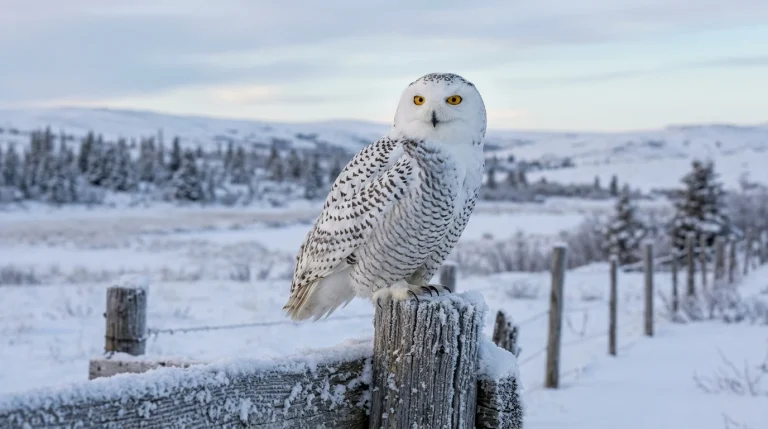
✨ This article was AI edited. Editorial responsibility: School Essay Writer. Describing a snowy owl‘s appearance requires precise anatomical vocabulary that captures…

✨ This article was AI edited. Editorial responsibility: School Essay Writer. Sensory description of places is a foundational creative and academic writing…

✨ This article was AI edited. Editorial responsibility: School Essay Writer. Writing a descriptive essay on a busy market requires immersing the…

✨ This article was AI edited. Editorial responsibility: School Essay Writer. Describing snowy weather in essay writing requires engaging all five human…

Crafting a self-introduction can be challenging, but by focusing on your unique qualities, experiences, and passions, you can create a memorable and authentic description of yourself. Here’s how to best describe yourself with confidence and clarity.

In a recent study on childhood development, researchers observed cooperative behavior in two-year-olds. Their findings shed light on how early social skills and sharing abilities develop in young children.
Envious Glances: Describing Jealousy in Writing with Nuance
Jealousy, a complex and common human emotion, can add depth and realism to our fictional characters. Mastering the art of describing jealousy in writing requires a nuanced approach. By employing subtle cues, body language, and internal monologues, writers can authentically portray envy, captivating readers in the process. In this article, we delve into the techniques that breathe life into envious characters, allowing their emotions to resonate with readers on a profound level. Join us as we unlock the secrets of depicting jealousy with finesse.

Weather fronts play a crucial role in describing air masses. They are boundaries where different air masses meet, influencing the weather patterns. Understanding their characteristics is essential for meteorologists to predict weather conditions accurately.

This excerpt appeals to readers’ emotions by using relatable examples and empathetic language to foster a deep emotional connection with the audience, ultimately drawing them in and resonating with their feelings.

Active listening is a crucial skill that fosters effective communication and engagement. By mastering techniques such as paraphrasing and mirroring, you can enhance your ability to truly connect with others and build stronger relationships.

When asked how your friends would describe you, it’s important to be genuine and self-aware. Reflect on your strengths, values, and experiences to provide an authentic response that showcases your best qualities.

When describing shadowing experiences on CASPA, it’s important to focus on what you gained. Use specific examples of skills learned and patient interactions to showcase your knowledge and passion for the field. Be concise and clear to make a strong impression.

Bacteria are used in the production of insulin through genetic engineering. By inserting the gene for human insulin into bacteria, they can produce insulin in large quantities. This process is a prime example of harnessing the power of microbes for medical advancements.

Effective communication is crucial when connecting with adventurous souls. By being clear, confident, and open-minded in your interactions, you can build strong relationships and create memorable experiences together.

Earthquake studies rely heavily on seismic travel-time curves for accurate analysis. By utilizing these curves, researchers can better understand the earth’s structure and predict the impact of future seismic events with more certainty.

Describing depression to someone can be challenging, but it’s important for spreading awareness and understanding. Start by explaining symptoms like persistent sadness, fatigue, and loss of interest. Encourage open conversations to break the stigma surrounding mental health.

Incorporating descriptive details about rocks in your writing can add depth and authenticity to your narrative. Let’s explore the importance of solid foundations in storytelling.

In the field of biotechnology, scientists have engineered bacteria to produce human insulin, a crucial hormone for managing diabetes. By inserting the gene responsible for insulin production into bacterial DNA, these microbial factories can efficiently manufacture insulin on a large scale. This innovative approach offers a sustainable and cost-effective solution for producing life-saving medication.

When writing about dusky complexions, it’s important to be descriptive yet respectful. Use terms like rich, deep, or luminous to celebrate the beauty of dark skin tones. Avoid negative connotations and stereotypes.
Compare core descriptive writing tasks by primary sensory modality, spatial-narrative pacing, and stylistic execution focus.
| Descriptive Archetype & Guide | Primary Sensory Modalities | Spatial Framing & Stylistic Technique |
|---|---|---|
| Multi-Sensory Place & Setting Description | Visual, Auditory & Olfactory | Wide-to-close spatial camera movement anchored by a dominant atmospheric impression. |
| High-Altitude & Landscape Essay | Visual, Tactile & Kinesthetic | Horizon-to-foreground contrast, thermal sensation, and acoustic stillness. |
| High-Energy Crowd & Market Scene | Auditory, Olfactory & Visual | Layered ambient dialogue, spice/food aromas, and kinetic movement verbs. |
| Wildlife & Natural Subject Portraiture | Visual & Kinesthetic | Plumage texture, predatory stillness, and silent flight cadence. |
| Internal Emotion & Psychological State | Visceral & Behavioral | Involuntary posture shifts, vocal cadence changes, and selective gaze. |
Explore targeted descriptive writing guides organized by natural landscapes, emotional states, and personal/literary characterization.
Anchor each paragraph in one dominant visual or spatial focal point, then layer one or two secondary non-visual modalities—such as ambient sound, temperature, or scent—that reinforce the scene's emotional mood.
Spatial order organizes physical details along a deliberate directional path—such as horizon-to-foreground, left-to-right, or threshold-to-center—so the reader's imagination builds a coherent mental map of the setting.
Instead of naming an emotion directly (e.g., "she felt nervous"), depict the involuntary physical and sensory markers associated with that state—such as shallow breathing, a dry throat, or heightened awareness of background noise.