
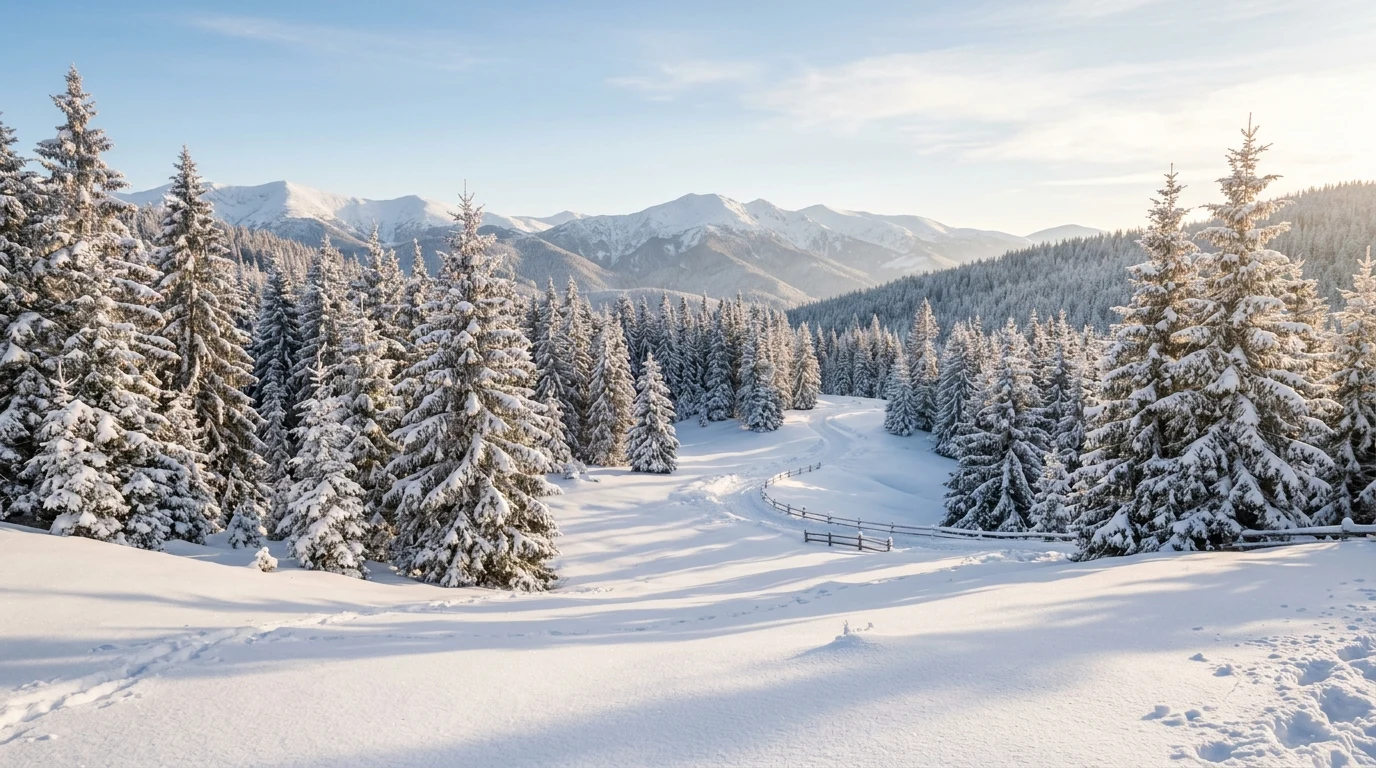
How to Describe Snowy Weather: Essay Writing Guide
✨ This article was AI edited. Editorial responsibility: School Essay Writer.
Describing snowy weather in essay writing requires engaging all five human senses rather than relying solely on visual adjectives like “white” or “cold.” By combining tactile textures, acoustic phenomena like muffled silence, thermal contrasts, and dynamic lighting, writers transform a generic winter setting into an immersive, atmospheric narrative world.
When students and creative writers approach a descriptive essay centered on winter, they frequently fall into the trap of visual repetition. Describing snow merely as “a white blanket” or the air as “freezing cold” flattens the reader’s sensory experience. Truly powerful descriptive writing captures the kinetic weight, the acoustic dampening of fallen powder, and the subtle emotional temperature of a winter landscape. Whether you are composing a personal narrative for a college application or a setting-focused descriptive piece for high school English, understanding how to construct multi-layered sensory prose is essential.
Contents
- The Five-Sense Winter Sensory Matrix
- Differentiating Types of Snow: From Powder to Sleet
- Psychological Atmospheres of Snowy Settings
- Annotated Exemplar Paragraphs: Before vs. After
- Advanced Descriptive Techniques: Synesthesia and Sound Symbolism
- Step-by-Step Writing Blueprint for a Snowy Descriptive Essay
- Frequently Asked Questions (FAQ)
The Five-Sense Winter Sensory Matrix
To craft visceral setting descriptions, systematically evoke multiple sensory receptors across your paragraphs. The table below provides targeted vocabulary, physiological responses, and sensory triggers for winter scenes:
| Sense Category | Sensory Triggers & Physics | Evocative Vocabulary Bank | Example In-Sentence Application |
|---|---|---|---|
| Sight & Illumination | Light refraction, glare, elongated shadows, crystal facets | Alabaster, crystalline, cerulean shadows, blinding glare, frosted rim, diamond dust, ivory canopy | The morning sun struck the fresh powder, igniting a blinding expanse of diamond dust across the dormant valley. |
| Sound & Acoustics | Acoustic absorption, mechanical crunch, wind friction | Muffled hush, compressed crunch, whistling squall, crystalline chime, brittle snap, velvet silence | Every step produced a sharp, dry squeak against the densely packed sub-zero drifts, breaking the eerie woodland silence. |
| Touch & Temperature | Thermal shock, skin prickle, moisture saturation, numbness | Numbing bite, brittle chill, prickling frost, thermal ache, wet sleet, stinging gale, abrasive ice | The sub-zero wind delivered an instantaneous, needle-sharp prickle against exposed cheekbones and chapped lips. |
| Smell & Atmosphere | Ozone purity, woodsmoke, cured timber, metallic air | Crisp ozone, cured birch smoke, mineral-pure air, metallic cold, pine resin, charcoal haze | A clean, ozone-charged draft mingled with the distant, sweet char of seasoned birch woodsmoke drifting from chimney pots. |
| Kinetic Motion | Weight, drift turbulence, air density, flurry spirals | Swirling eddies, settling flurry, heavy canopy, suspended haze, drifting veil, blizzard torrent | Snowflakes drifted in lazy, dizzying spirals before settling into a thick, weightless velvet accumulation across the sills. |
Differentiating Types of Snow: From Powder to Sleet
Precision in noun selection elevates your essay from amateur observation to evocative storytelling. Snow manifests in dramatically different states depending on atmospheric temperature, humidity, and wind velocity:
- Fresh Dry Powder (Sub-Zero Conditions): Light, aerated, and completely weightless. It billows like flour when disturbed and refuses to compact into snowballs. Ideal for serene, untouched wilderness scenes or alpine exploration narratives.
- Heavy Wet Snow (Near-Freezing Temperatures): Saturated with moisture, clinging stubbornly to telephone wires and bending pine boughs into graceful arches. Perfect for tactile, labor-intensive descriptions such as shoveling driveways or building snow forts.
- Crusted Wind-Pack: A brittle top glaze formed by sunlight followed by immediate freezing gusts that shatters underfoot like thin sugar glass, revealing soft granules beneath.
- Driving Blizzard & Sleet: Aggressive, horizontal pellets that reduce visibility to a disorienting whiteout and sting exposed skin with mechanical fury.
- Melting Slush: Heavy, grey-tinged slurry churned by vehicle tires, reflecting neon streetlights in wet urban winter landscapes.
Psychological Atmospheres of Snowy Settings
In literary composition, setting serves as a direct mirror of character psychology and thematic intent. Winter environments can evoke four distinct atmospheric moods:
- Serene Isolation & Contemplation: The world slows to a tranquil pause. The acoustic dampening of snow creates a sanctuary for internal reflection, healing, or philosophical realization.
- Cozy Sanctuary & Warm Contrast: The harshness of the freezing exterior magnifies the emotional safety of indoor hearths, steaming mugs of tea, and glowing amber lamps.
- Peril & Survival: Sub-zero exposure introduces genuine physical stakes—loss of orientation in a blizzard, numbing extremities, and the unforgiving indifference of nature.
- Urban Transformation & Chaos: Snow reveals the friction of city life: stalled commuter trains, salted slush spraying from buses, and pedestrians navigating treacherous icy sidewalks.
Annotated Exemplar Paragraphs: Before vs. After
Basic Paragraph (Telling, Low Sensory Engagement)
“It was very snowy outside. The ground was covered in white snow and the trees looked pretty. It was quiet and very cold as I walked down the street. I could feel the cold wind on my face and I wanted to go back inside where it was warm.”
Advanced Exemplar (Showing, Multi-Sensory Density)
“A profound, almost reverent hush had settled over the valley overnight, as though the twelve inches of fresh powder had absorbed every ambient sound in town. Stepping off the porch, my boots broke through the brittle surface crust with a satisfying, dry crunch, sending up micro-plumes of frozen dust that sparkled in the low amber morning light. The air smelled of sharp ozone and seasoned birch smoke, biting at the bridge of my nose with immediate, stinging clarity. Through the heavy canopy of bowed hemlocks, pale cerulean shadows stretched across the lawn, tracing the contours of drifts that had swallowed the garden fence whole.”
Advanced Descriptive Techniques: Synesthesia and Sound Symbolism
To produce truly memorable prose, incorporate advanced rhetorical devices that blend sensory categories:
- Synesthesia (Blending Senses): Describe auditory phenomena using tactile or visual vocabulary—e.g., “The silence was heavy and wool-thick,” or “A blinding, shrill gust of wind tore across the ridge.”
- Sound Symbolism (Phonosemantics): Utilize hard plosives (k, t, p, d) to evoke cracking ice and sharp snaps (“brittle twigs snapped under the weight of crusted sleet”), and soft sibilants (s, sh, z) to mirror quiet snowfall (“soft flakes sifted silently through the shadowed spruce”).
- Kinetic Verbs: Replace passive forms of ‘to be’ with dynamic verbs of motion—instead of “there was snow on the roof,” write “heavy drifts slumped over the eaves, groaning under their own accumulating mass.”
Step-by-Step Writing Blueprint for a Snowy Descriptive Essay
- Establish the Establishing Shot (Macro-View): Open with the sky, light conditions, and horizon line. Is the sky a flat leaden grey, or is the sun piercing through diamond dust?
- Zoom into the Mid-Ground (Environmental Physics): Describe the interaction between weather and architecture/nature. Trees bowing, snow drifts curling against fences, smoke rising from chimneys.
- Focus on the Micro-Sensory Foreground: Bring the reader into the immediate physical presence of the narrator. The crunch under boot treads, the condensation of breath, the thermal sting on fingertips.
- Introduce the Narrative or Reflective Catalyst: Use the setting to trigger a memory, an encounter, or an internal epiphany.
Frequently Asked Questions (FAQ)
- How do I describe snow without repeating the word ‘white’?
- Focus on light qualities, surface textures, and color reflections (such as ivory, alabaster, pearl, silver, or blue-tinted shadows) rather than relying solely on the base color descriptor.
- What is the best way to convey the feeling of extreme cold?
- Describe physiological responses—constricted breathing, numbness in the fingertips, tears freezing on eyelashes, and the instinctive hunching of shoulders against the wind.
- How can I use sound in a snow description?
- Highlight acoustic absorption: fresh snow dampens ambient noise, creating an eerie, absolute silence punctuated only by immediate footfalls, cracking branches, or distant wind whistling.
- What are good metaphors for falling snow?
- Compare falling snow to falling feathers, suspended dust motes, theater curtains descending on a stage, or a slowly dissolving world of white marble.
Get our latest guides, news, and insights highlighted in your Google Search & AI Overviews.


